
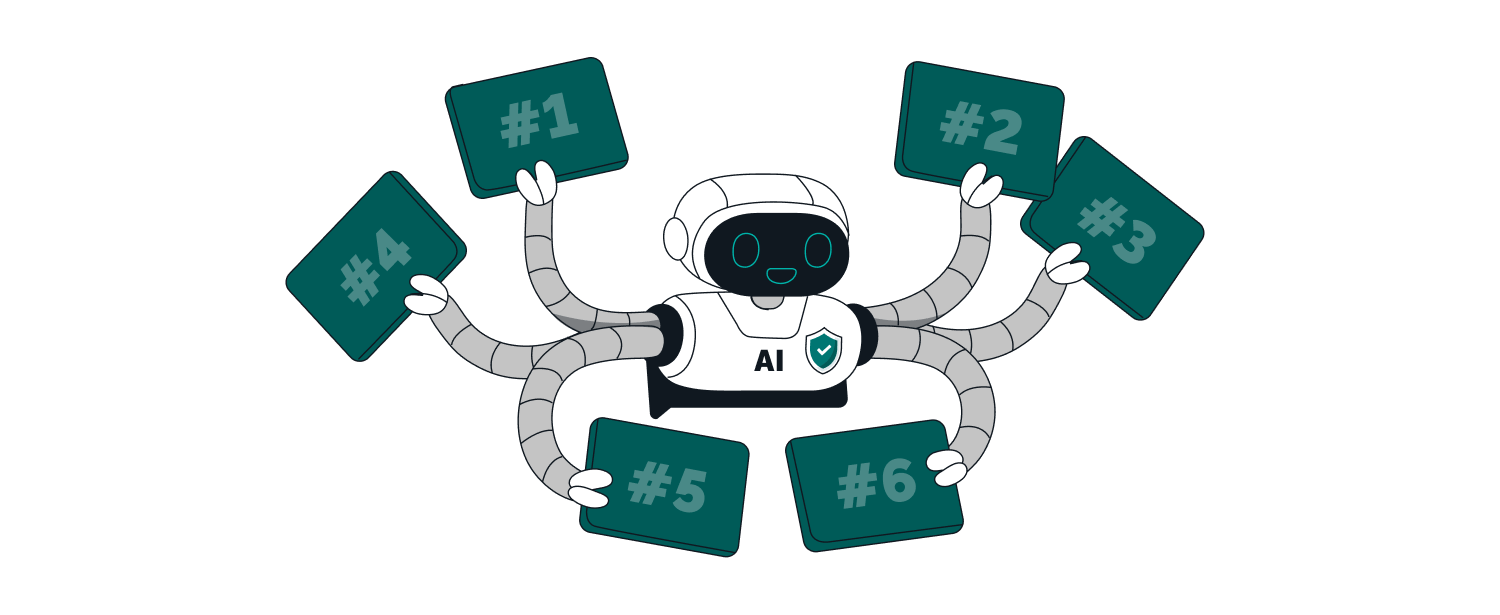
Top 10 Creative Tools You Need to Increase Security
How modern creative tools and tech tools for 2025 strengthen workflows, harden processes, and improve team security.
In 2025, the right creative tools and tech tools can be the difference between a fragile process and a resilient security posture. This article explores ten best tools that blend creative workflows with security-focused practices, helping teams adopt workflow optimization and safer software apps. Whether you design secure interfaces, document runbooks, or run lightweight security scans, these 2025 tools help make security a natural part of creativity.
Table of Contents
- 1. What is Creative Tools for Security?
- 2. Top 10 Creative Tools for Teams
- 3. Comparison Table
- 4. FAQ
What is Creative Tools for Security?
Creative tools for security combine design thinking, documentation, and lightweight tooling to improve how teams identify and fix risks. These solutions—ranging from visual diagram apps to secure note-taking and lightweight scanners—help embed security early into workflows. By aligning creative tools with tech tools and 2025 tools best practices, teams can use visual threat modeling, collaborative runbooks, and versioned design assets to reduce vulnerabilities. The approach prioritizes workflow optimization and integrates software apps that support secure collaboration while keeping designers, engineers, and security practitioners in sync.
Top 10 Creative Tools for Teams
-
Figma — Collaborative Secure Design
Figma is a leading collaborative design platform that doubles as a security-strengthening creative tool when used with strict team policies. Designers and security engineers can co-author wireframes, annotate threat surfaces, and maintain versioned UI libraries that reduce risky design drift. Because Figma supports granular permissioning and audit history, it becomes a tech tool that enforces who can edit sensitive UI flows and data-mapping mockups. Integrating Figma into security reviews and sprint grooming accelerates workflow optimization: prototypes are evaluated early for data exposure, input validation, and privacy considerations. Use Figma in 2025 as part of a secure design lifecycle to keep creative outputs auditable and to reduce last-minute security rework across software apps.
-
Lucidchart — Threat Modeling & Architecture Diagrams
Lucidchart is a visual diagramming tool ideal for threat modeling and system architecture—making it a creative tool that improves security clarity. Teams use Lucidchart to map data flows, highlight trust boundaries, and collaborate on mitigation patterns directly within the diagram. As a tech tool for 2025, it supports integrations that export diagrams into issue trackers or documentation platforms, helping enforce workflow optimization by tying visuals to security tasks. When product, design, and security teams share a living architecture diagram, they identify risky interfaces earlier and build secure software apps with fewer gaps. Lucidchart’s templates and collaborative comments turn abstract risk conversations into actionable tickets—bridging creativity and applied security practices.
-
Miro — Secure Brainstorming & Incident Playbooks
Miro’s infinite canvas is a creative tool used for collaborative workshops, incident playbooks, and threat-hunting sessions. By running threat modeling workshops in Miro, teams can visually capture attack scenarios, assign mitigation owners, and export agreed actions to the sprint backlog. Miro supports templates for runbooks and incident response flowcharts, making it a tech tool that supports workflow optimization during crises. Integrating Miro boards into secure tooling ecosystems ensures that post-incident retrospectives feed improvements back into documentation and software apps. For 2025 teams, Miro helps democratize security: non-security stakeholders can contribute to resilient designs and maintain shared ownership of operational readiness.
-
Notion — Secure Documentation & Playbooks
Notion is a flexible knowledge platform used as a creative tool for building secure runbooks, onboarding guides, and developer checklists. With scoped access controls and database templates, Notion helps teams maintain versioned security policies and operational runbooks that align with workflow optimization goals. Teams can embed diagrams, code snippets, and scan results—making Notion a hub that connects design thinking to concrete security practices across software apps. For 2025 organizations, Notion reduces friction between creativity and compliance by keeping documentation discoverable, searchable, and permissioned for the right audiences. Use Notion to convert ad-hoc security ideas into standardized procedures that improve repeatability and resilience.
-
Obsidian — Local-First Secure Notes & Research
Obsidian is a local-first note-taking creative tool prized by security researchers for private threat intelligence, playbooks, and research notebooks. The app’s vault model keeps notes on disk (not solely in the cloud), which is helpful when you need stronger control over sensitive investigative material. Obsidian supports backlinks, graph views, and encrypted sync options—making it a practical tech tool for 2025 teams performing deep-dive security analysis. Using Obsidian as part of your workflow optimization ensures research remains private while still being sharable via controlled exports when required by the team. For practitioners who value auditability and local control, Obsidian blends the creative act of hypothesis mapping with secure storage practices for security-focused workflows.
-
CyberChef — Creative Data Transforms & Forensics
CyberChef is a creative, web-based tool for transforming, decoding, and analyzing data—perfect for quick forensic tasks and secure data handling. Often described as a “cyber Swiss army knife,” CyberChef lets analysts visually chain transforms to decode logs, extract indicators, and sanitize sensitive data. As a 2025 tech tool, it speeds up workflow optimization by enabling reproducible transformations and sharing of recipes that capture investigative steps. CyberChef helps teams convert raw, messy artifacts into structured intelligence used to harden defenses in software apps and infrastructure. Because the tool runs locally in many deployments, it’s a useful creative tool for preserving privacy while enabling rapid, exploratory analysis during incident response.
-
OWASP ZAP — Lightweight Creative Scanning
OWASP ZAP is an open-source security scanner that teams use as a creative tool to discover common web vulnerabilities early in development. ZAP’s GUI and scripting capabilities allow developers and designers to run exploratory scans, capture issues, and embed checks into CI pipelines. As a practical 2025 tech tool, it complements design and documentation by providing concrete findings that feed back into workflow optimization and secure software apps. Using ZAP as part of feature sprints encourages a creative security mindset: build, scan, fix, and repeat—reducing surprises at release time. Its extensibility and active community make OWASP ZAP a go-to creative tool for teams focused on low-cost, high-impact security validation.
-
Burp Suite — Interactive Application Testing
Burp Suite is a professional interactive testing platform that security teams use as a creative tool to probe and harden web applications. The suite’s proxy, repeater, and scanner components let testers craft targeted attacks and prototype mitigations in a controlled environment. As a 2025 tech tool, Burp integrates findings into developer workflows and complements other software apps used for tracking and remediation. When used during design reviews and pre-release testing, Burp Suite helps teams prioritize fixes and refine secure UX patterns. While Burp is more technical than design tools, it is essential for teams that combine creative problem solving with rigorous verification to increase security.
-
GitHub — Secure Collaboration & Code Review Workflows
GitHub is a collaboration platform that serves as a creative tool for secure code reviews, dependency scanning, and automated checks. With features like protected branches, codeowners, and automated security alerts, GitHub helps teams enforce guardrails that reduce risky changes. As a tech tool for 2025, its integration with CI/CD and security scanners enables workflow optimization where design decisions and security tests live together. Designers and engineers can reference designs, diagrams, and runbooks from inside pull requests—providing context that speeds secure decision-making. Using GitHub as the source of truth closes the loop: creative specs, implementation, and security validation are traceable and auditable.
-
Postman — Secure API Design & Contract Testing

Postman is a creative tool for API design, mocking, and contract testing that helps teams catch security issues during the design phase. By creating shared collections, running automated schema validations, and verifying authentication flows, Postman supports workflow optimization across teams. As a 2025 tech tool, it provides collaboration features that let developers, QA, and security reviewers iterate on API behavior without spinning environments. Integrating Postman checks into CI ensures that software apps respect authentication, rate limits, and input validation before launch. Using Postman promotes a creative, test-driven approach to API security—reducing the chance of runtime surprises and improving overall resilience.

Comparison Table
| Tool Name | Key Feature | Best For |
|---|---|---|
| Figma | Collaborative design + permissions | Secure UI design & prototypes |
| Lucidchart | Architecture & threat diagrams | Threat modeling |
| Miro | Workshops & playbooks | Incident response planning |
| Notion | Versioned docs & templates | Runbooks & policies |
| Obsidian | Local-first notes | Private research |
| CyberChef | Data transforms & recipes | Forensics & analysis |
| OWASP ZAP | Open-source web scanner | Dev-level scanning |
| Burp Suite | Interactive testing & exploitation | Advanced app testing |
| GitHub | Code reviews & security alerts | Dev collaboration |
| Postman | API mocking & contract tests | API security & design |
FAQ
Q1: What are creative tools for security and why use them?
Creative tools combine visual, collaborative, and documentation capabilities to help teams identify and reduce risk earlier. By using creative tools alongside tech tools and 2025 tools best practices, teams accelerate workflow optimization, catch design-time issues, and make security an integrated part of product development.
Q2: How do creative tools improve workflow optimization?
Creative tools improve workflow optimization by turning abstract threats into diagrams, checklists, and repeatable templates that plug into CI/CD and issue trackers. This reduces context switching and ensures security tasks are tracked in the same systems used for product work.
Q3: Are these creative tools suitable for small teams?
Yes—many creative tools scale to small teams and offer free tiers (or community editions) so you can adopt secure practices without major investment. Small teams benefit from faster feedback loops, shared documentation, and lightweight scans that fit their delivery cadence.
Q4: Which creative tools help with incident response?
Tools like Miro and Notion are excellent for incident response because they support playbooks, runbooks, and collaborative triage. When paired with forensic tools such as CyberChef, these creative tools speed investigation and remediation while keeping records auditable.
Q5: How do I choose the right creative tools for my organization?
Choose tools based on who needs access, integration requirements, and your desired workflow optimization. Evaluate security controls (permissions, encryption), integrations with software apps you already use, and how easily the tool supports reproducible security tasks.
Adopting the right creative tools is a pragmatic way to increase security without slowing innovation. The combination of design-focused platforms, diagramming apps, documentation hubs, and lightweight scanners creates a pipeline where security becomes a shared responsibility. By prioritizing workflow optimization and integrating these tech tools into your existing software apps, teams can build safer products in 2025 while keeping collaboration and creativity intact. Start small—pick one or two tools from this list, create a template or playbook, and watch security become part of everyday design and delivery.



0 Comments