
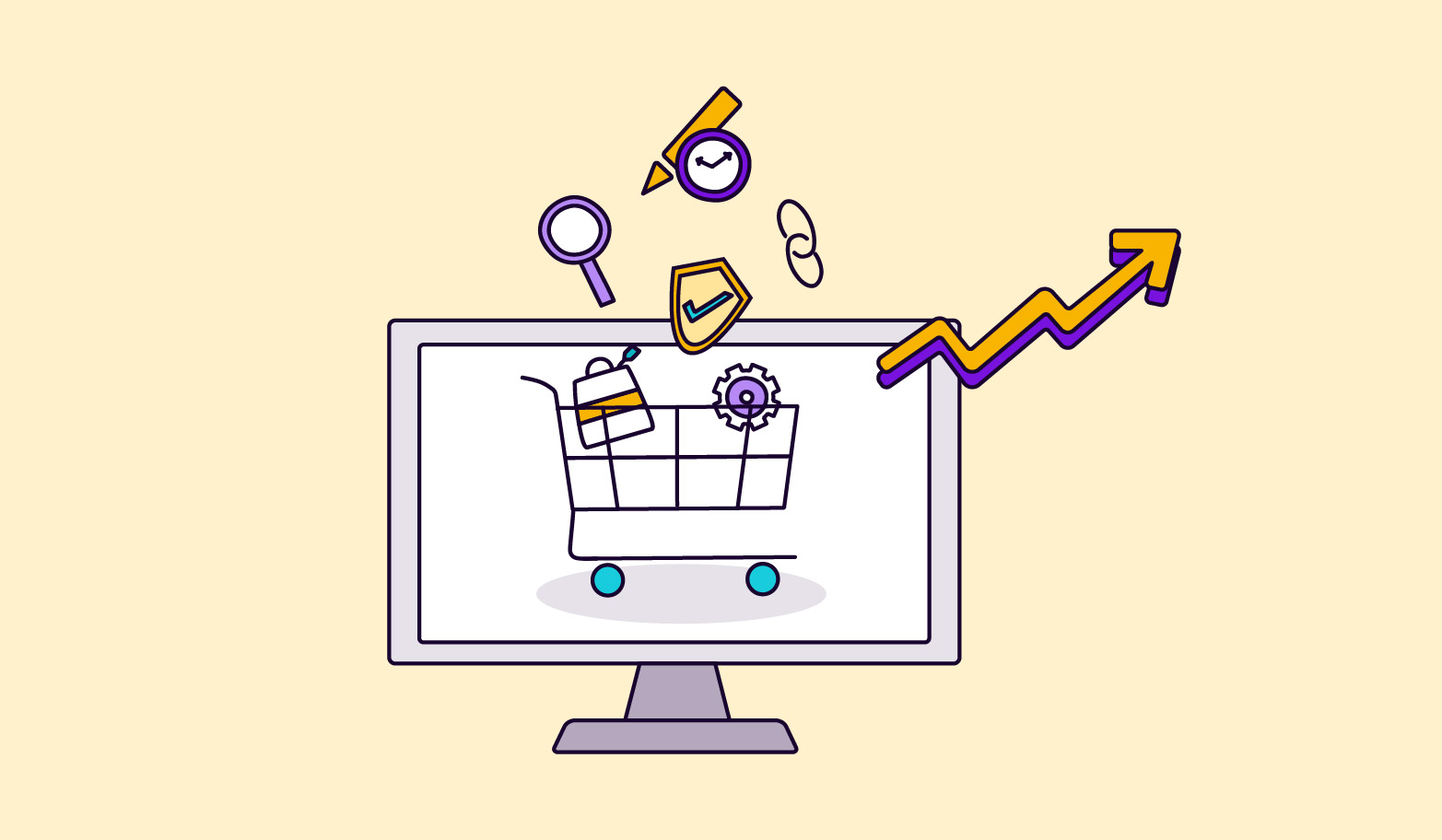
Top 10 AI Tools You Need to Scale Business Tools
A practical guide to the leading ai tools and tech tools of 2025 that automate work, improve decision-making, and deliver measurable workflow optimization for teams and businesses.
Most businesses fail to scale not because of talent, but because their AI and tech tools are scattered and inefficient. This article is for founders, marketers, and operations teams who want to eliminate tool sprawl and scale faster by applying the right AI Tools to automate workflows and improve decision-making. The right tools can cut hours of repetitive work, uncover hidden insights in your data, and seamlessly connect your software stack. From automating campaigns to accelerating content creation and streamlining customer support, selecting the right AI tools directly amplifies your team's impact.
Table of Contents
What Are AI Tools?
AI tools are software apps that use machine learning, large language models, or generative models to automate tasks, generate content, or extract insights from data. In business contexts these tech tools integrate with existing workflows (CRMs, CMS, analytics, support desks) to automate routine steps, augment decision-making, and trigger downstream automations. Properly implemented AI tools reduce manual processing time, scale personalized experiences, and provide measurable workflow optimization when combined with monitoring and human-in-the-loop controls.
Top 10 AI Tools for Scaling Business Tools
1. OpenAI (GPT family / API)
OpenAI’s GPT models power a huge range of business use cases—from customer support chatbots to content generation and code assistance. As a foundational ai tool, OpenAI provides APIs that let teams embed natural language generation, summarization, translation, and semantic search into existing software apps. Businesses use GPT to automate FAQ handling, draft emails, create product descriptions at scale, and generate code snippets that speed developer productivity. Key to scaling is pairing the model with retrieval-augmented generation (RAG) for secure access to company data, rate-limiting and monitoring, and human review workflows to ensure accuracy and guardrails. When implemented correctly, OpenAI becomes a flexible engine for workflow optimization across marketing, support, and engineering.
2. Anthropic Claude
Anthropic’s Claude is designed for high-quality, controllable conversational AI and is widely adopted by enterprises seeking a safety-forward model. Claude excels at multi-turn workflows: drafting policies, summarizing long documents, and assisting in research tasks. Teams use Claude as an ai tool for internal knowledge assistants, legal and compliance summarization, and long-form content drafting where tone and alignment matter. Combining Claude with secure document retrieval and access controls enables employees to query internal knowledge bases while preserving data governance. Companies that prioritize safe, explainable outputs often choose Claude as a core component of their AI-enabled workflows and automation stacks. Check out, Top 10 Cybersecurity Tools You Need to Increase Security
3. Google Gemini (and Vertex AI)
Google’s Gemini models, paired with Vertex AI, provide enterprise-grade capabilities for building, deploying, and monitoring machine learning systems. Gemini is used for multilingual generation, code assistance, and multimodal tasks, while Vertex AI handles MLOps—model versioning, monitoring, and CI/CD for ML. As an ai tool, this combination is ideal for teams already on Google Cloud that need tight integration with data pipelines, BigQuery, and production monitoring. Vertex AI’s managed pipelines and feature stores help operationalize models safely, enabling continuous improvement and measurable workflow optimization for data-driven automation across product, analytics, and recommendation systems.
4. Microsoft Copilot & Azure OpenAI
Microsoft Copilot integrates AI directly into productivity apps—Word, Excel, Outlook, and Teams—making it a practical ai tool for boosting employee productivity. Copilot helps automate drafting, data summarization, spreadsheet analysis, and meeting-note generation within the software apps people already use. On Azure, organizations can access Azure OpenAI services to run models with enterprise controls and compliance. The combined Microsoft stack supports workflow optimization by embedding automation at the point of work—reducing context switching and accelerating everyday tasks across marketing, sales, and operations teams.
5. Jasper (content generation)

Jasper is an ai tool focused on marketing and content generation—ideal for teams that need high-volume, consistent messaging. Jasper provides templates, tone controls, and SEO-focused workflows to produce blog posts, ad copy, and product descriptions quickly. It integrates with content management systems and SEO tools so outputs can be published or queued for review automatically. Jasper’s value is accelerating the content funnel: ideation, drafting, revisions, and metadata generation (titles, meta descriptions) become much faster. For teams scaling marketing efforts, Jasper reduces manual creative hours and plugs into editorial workflows for measurable workflow optimization.
6. Midjourney & Stable Diffusion (generative images)

Generative image tools like Midjourney and Stable Diffusion are transformative ai tools for creative teams. They rapidly produce hero images, concept art, and marketing visuals from text prompts—ideal for prototyping concepts or producing variations at scale. Businesses integrate these models into asset pipelines for A/B testing creatives, generating hero imagery for landing pages, or conceptualizing product designs before commissioning final art. Licensing, ownership, and quality checks are important, so teams combine generative outputs with human refinement and brand guidelines. When used responsibly, these ai tools dramatically shorten the creative ideation phase and increase throughput for visual production workflows.
7. Runway (multimedia & video AI)
Runway is an ai tool that brings generative and assistive AI to video and multimedia workflows—background removal, style transfer, and fast editing. Creative teams use Runway to automate tedious post-production tasks and generate variations for social formats quickly. Runway’s multimodal models can transform footage, create motion effects, and help teams iterate on visual storytelling without a large VFX budget. Integrating Runway into video pipelines allows producers to test creative directions rapidly and push many variants to market—an important component of workflow optimization for modern content teams.
8. Zapier (with AI and GPT integrations)

Zapier is an automation platform that connects hundreds of software apps and now supports AI steps and GPT integrations. As an ai tool for operations, Zapier automates end-to-end workflows: parse incoming messages with AI, enrich records, route tasks, and trigger downstream systems without custom engineering. For example, incoming leads can be summarized and prioritized by an AI step, then routed to sales with contextual notes. Zapier's low-code approach democratizes automation, enabling non-engineering teams to implement workflow optimization that would otherwise require developer resources, accelerating organizational scalability.
9. Hugging Face (models & MLOps)

Hugging Face provides a model hub and tooling for deploying NLP and multimodal models, plus inference and MLOps capabilities. It’s an ai tool favored by teams that need flexibility: fine-tune open models, host them in production, and manage versions. Hugging Face's libraries and Inference Endpoints simplify integration into product stacks, while Spaces allow rapid prototyping. For companies building specialized AI features—domain-specific search, custom summarization—Hugging Face offers a developer-friendly platform for experimentation and production, enabling reliable workflow optimization across AI-enabled products.
10. DataRobot / Dataiku (enterprise ML platforms)
DataRobot and Dataiku are enterprise AI and MLOps platforms that help organizations build, deploy, and monitor machine learning models at scale. These ai tools provide automated feature engineering, model selection, and deployment pipelines with governance, explainability, and monitoring baked in. They are used to productionize predictive models—churn scoring, demand forecasting, fraud detection—while providing audit trails and performance monitoring. For businesses seeking to operationalize ML across multiple teams, these platforms deliver the governance and automation that turn prototypes into repeatable, measurable workflow improvements.
Comparison Table
| Tool Name | Key Feature | Best For |
|---|---|---|
| OpenAI (GPT) | Flexible LLM APIs & RAG | Chatbots, content generation, semantic search |
| Anthropic Claude | Safety-focused conversational AI | Knowledge assistants, compliance summarization |
| Google Gemini / Vertex AI | MLOps + multimodal models | Data pipelines & production ML |
| Microsoft Copilot | Embedded AI in productivity apps | Office automation & enterprise productivity |
| Jasper | Marketing-focused content generation | Content teams & SEO workflows |
| Midjourney / Stable Diffusion | Generative image creation | Creative prototyping & visual assets |
| Runway | AI for video & multimedia | Video editing & fast VFX |
| Zapier (AI) | Low-code automations with AI steps | Non-engineer automation & orchestration |
| Hugging Face | Model hub & inference endpoints | Custom NLP & model hosting |
| DataRobot / Dataiku | Enterprise MLops & governance | Production ML at scale |
FAQ
1. What are the best ai tools for scaling business tools?
The best ai tools include LLM APIs (OpenAI, Anthropic), enterprise MLOps (DataRobot, Dataiku), automation platforms with AI steps (Zapier), and creative engines (Midjourney, Runway). Together these ai tools and tech tools automate repetitive tasks and enable workflow optimization across teams.
2. How do AI tools improve workflow optimization?
AI tools automate routine tasks (summarization, routing, content generation), surface insights from large datasets, and enable programmatic decision-making. When integrated with monitoring, human review, and governance, AI-driven automations reduce manual steps and shorten cycle times for common business processes.
3. Are these ai tools safe to use with company data?
Safety depends on implementation: use private deployments or on-prem endpoints (Vertex AI, Azure OpenAI, Hugging Face Inference Endpoints), apply RAG with scoped retrievers, and add human-in-the-loop review and logging. Enterprise platforms provide compliance controls to protect sensitive data.
4. Which AI tool should a small business start with?
Small businesses often start with low-friction ai tools like Zapier (automation with AI steps) and OpenAI or Jasper for content generation. These tools deliver immediate productivity gains with minimal engineering while allowing teams to scale usage and controls over time.
5. How do I measure the impact of AI tools?
Track metrics such as time saved per task, automation rate (percentage of tasks automated), error reduction, throughput (e.g., content produced per week), and business KPIs like conversion lift or support resolution time. Monitoring these metrics quantifies workflow optimization from ai tools.
Conclusion
Choosing the right ai tools in 2025 helps organizations scale business tools without proportionally increasing headcount. Combine LLMs for language tasks (OpenAI, Anthropic), creative generative models for visuals (Midjourney, Runway), automation platforms (Zapier), and enterprise MLOps (DataRobot, Dataiku) to build a resilient, automated stack. Prioritize integrations, data governance, and measurable KPIs to ensure AI-driven workflow optimization delivers reliable business outcomes and sustained efficiency gains.
Also check out AI tools to learn coding faster



0 Comments